The forest smells like a forest. That sounds simple. Behind it lies chemistry—and it is beautiful.
What you smell when you walk through a coniferous forest has a name. Terpenes.
What Terpenes Are
Terpenes are a large group of natural fragrances. Plants produce them—especially conifers.
Chemically, they consist of small, identical building blocks called isoprene units. From these, an astonishing variety arises. Several thousand different terpenes are known.
They are the main component of many essential oils and resins.
Why Plants Smell
Terpenes are the language of plants. They attract. They repel. They protect the tree.
For us, they are primarily one thing: fragrance. The resinous breath of a pine. The freshness of a lemon. The coolness of fresh needles.
Three Well-Known Terpenes
-
Pinene — the smell of pine and coniferous forest. The most widespread terpene in nature.
-
Limonene — the bright freshness of citrus peels.
-
Linalool — the soft, calm note known from lavender.
Three names. Three worlds. And yet the same family.
Terpenes at TPdeux
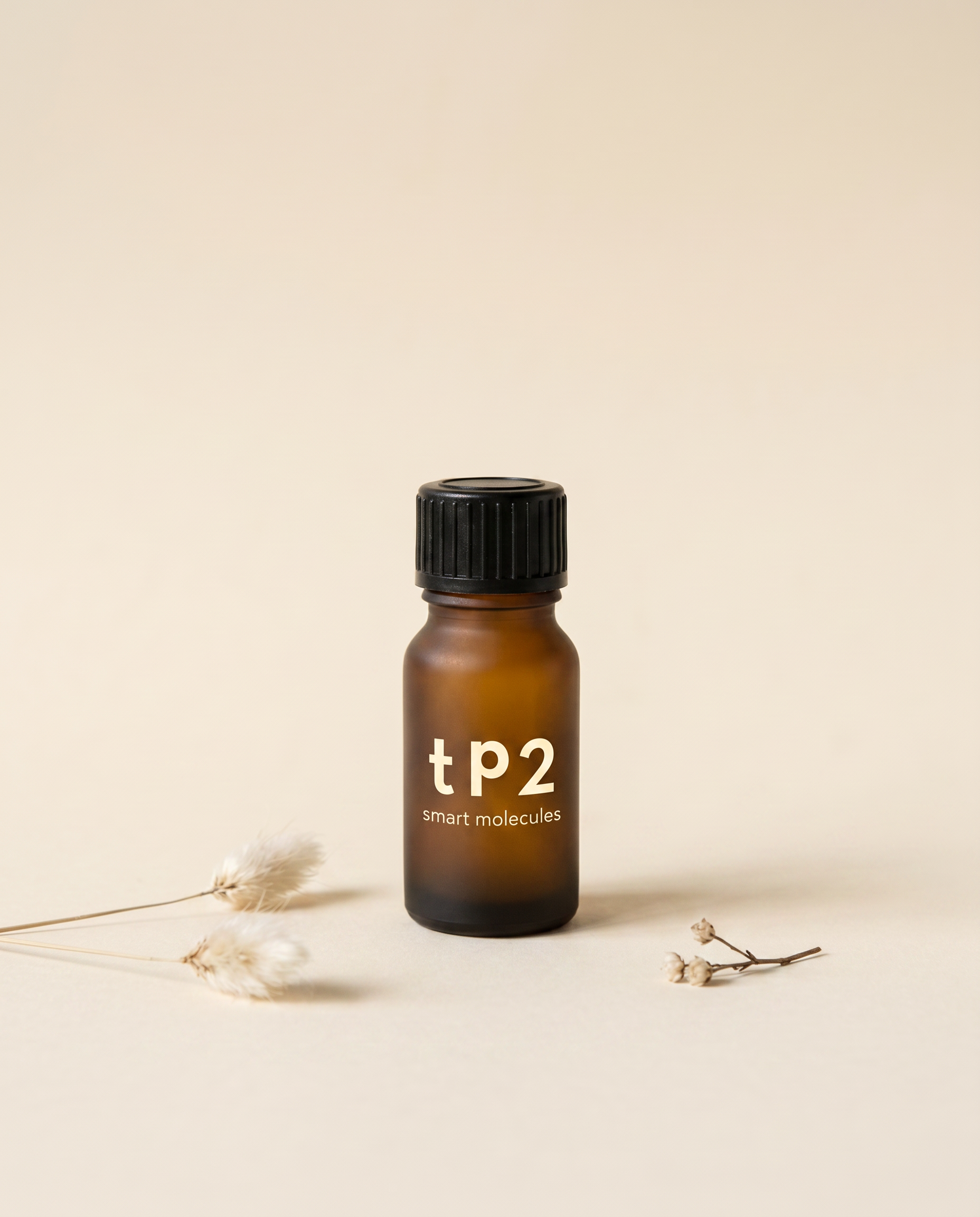
TPdeux is a composition of carefully selected terpenes. Inspired by the coniferous forest. Tuned for the diffuser.
No promise. A fragrance. The essence of the forest, captured in a drop.
Frequently Asked Questions
What are terpenes? Natural fragrance molecules produced by many plants—especially conifers. They give forests, citrus, and herbs their characteristic scent.
Are terpenes natural? Yes. They are widely found in nature and are the main component of many essential oils and resins.
Where are terpenes found? In conifers, citrus fruits, herbs, and many other plants.
Sources
-
"Terpenes," Wikipedia — on definition, structure from isoprene units, and occurrence (en.wikipedia.org/wiki/Terpene)
Note: This article explains terpenes as natural fragrances. It contains no health-related claims.
The essence of the forest.