The TP2 Journal
From Forest to Formula: How the TP2 Composition Came to Be
Ten studies, gas chromatography, 14 formulations – and in the end, one: How the TP2 composition was developed from the analysis of real forest air.
Learn moreOrigin and Sustainability – why Corsica | TPdeux
Where something comes from tells you what it is. TPdeux is created in Corsica. This is no coincidence. The Scented Isle Corsica is known as the scented isle. Almost half of the island is covered in maquis — wild scrubland of myrtle, rosemary, thyme, and sage. The scent greets you as soon as you step off the plane. An Ancient Tradition The plants of the maquis have long been distilled in Corsica. Myrtle, immortelle, cistus, juniper. An island that understands scent as a craft. It is within this tradition that TPdeux is created — at the Les jardins de Bordeo manufactory. Why It Matters Origin is responsibility. A solid manufactory. Clear processes. A careful composition. Not a scent from everywhere. A scent from one place. Frequently Asked Questions Where is TPdeux made? In a manufactory in Corsica — Les jardins de Bordeo. Why Corsica? Corsica, the "scented isle," has a long tradition of distilling aromatic plants. What is the maquis? The wild, aromatic scrubland that covers large parts of Corsica — with myrtle, rosemary, thyme, and more. Sources Visit Corsica — on the maquis and the tradition of essential oils (visit-corsica.com) National Geographic — on Corsica's maquis herbs Note: This article describes origin and tradition. It does not contain any health-related claims. A scent from one place.
Learn moreMindfulness and Fragrance - Small Rituals for More Calmness | TPdeux
Peace rarely comes on its own. You invite it in. With a small, recurring gesture. A ritual. What a ritual is A ritual isn't a big deal. It's a conscious gesture that repeats itself. The first cup of tea. The open window in the morning. A scent that marks a moment. Scent as an anchor Smell and memory are closely linked. A scent can be a sign: It's break time now. Not loud. Not demanding. A quiet anchor in the day. Three small rituals Morning. Before the first screen lights up: a breath, a scent, a look outside. In between. Seven minutes unreachable. The diffuser on, the phone away. Evening. The transition from day to space. The light dimmed, the scent uplifted. Frequently Asked Questions How do I create a scent ritual? Choose a fixed moment in the day and connect it with a scent. Repetition creates the ritual. Which moment is suitable? In the morning before starting, a break at midday, or the transition into the evening. Why scent? Smell and memory are closely linked — a scent quickly brings a moment back. Sources Brand perspective by TPdeux Note: This post describes personal rituals. It contains no health-related statements. A drop of silence.
Learn moreThe Scent Worlds of TP2 – Forest, Water, Earth, Light | TPdeux
A forest is never just green. It is morning mist and midday light. Stream and soil. Resin and silence. TPdeux thinks of the forest in four worlds. Four moods. One family. Forest The anchor. Needles, resin, bark. Deep green and the calm beneath tall trunks. Water Freshness. Dew on needles. A stream over mossy stone. Mist over the forest lake in the morning. Earth Ground. Moss, damp soil, the darkness beneath the roots. A calming presence. Light Warmth. Sunbeams through the canopy. Floating particles. The moment when the forest breathes a sigh of relief. One Family Four worlds, one origin. They can be experienced individually — or in alternation, depending on the day and space. Choose the world that suits your moment. Frequently Asked Questions What are the fragrance worlds of TPdeux? Four forest-inspired fragrance moods: Forest, Water, Earth, and Light. How do they differ? In character and mood — from deep and resinous (Forest) to warm and bright (Light). Can the worlds be combined? They are designed as a family and can be chosen depending on the day and space. Sources Brand perspective of TPdeux Note: This post describes fragrance moods. It does not contain any health-related claims. The essence of the forest.
Learn moreRoom scent with style – how premium fragrance transforms a room | TPdeux
A room has a sound. It has light. And it has a scent. The scent is easily overlooked — until it's just right. Scent is Interior Design Furniture is seen. Scent is felt. Both belong together. A good room scent is not a decoration. It is an atmosphere. Less, but Better Cheap scent is pushy. Good scent recedes. Premium here does not mean: more. Premium means: the right thing, subtly. Scent and Space Not every room wants the same scent. A study in the morning. A living room in the evening. Choose by mood, not by strength. The Subtle Gesture The most beautiful scent is one the guest cannot name — yet still takes with them. That is the idea behind TPdeux. The pine forest, finely dosed, as a calm gesture in the room. Frequently Asked Questions What makes a premium room scent? Subtlety and the quality of the composition. A scent that supports the room without being obtrusive. Which room scent suits where? Choose according to the time of day and the mood of the room — fresher in the morning, calmer in the evening. How do I properly dose room scent? Start sparingly. A good scent remains in the background. Sources Brand perspective of TPdeux Note: This article describes design with scent. It contains no health-related statements. The forest that remains.
Learn moreUsing Aroma Diffusers Correctly – Dosage, Placement, Care | TPdeux
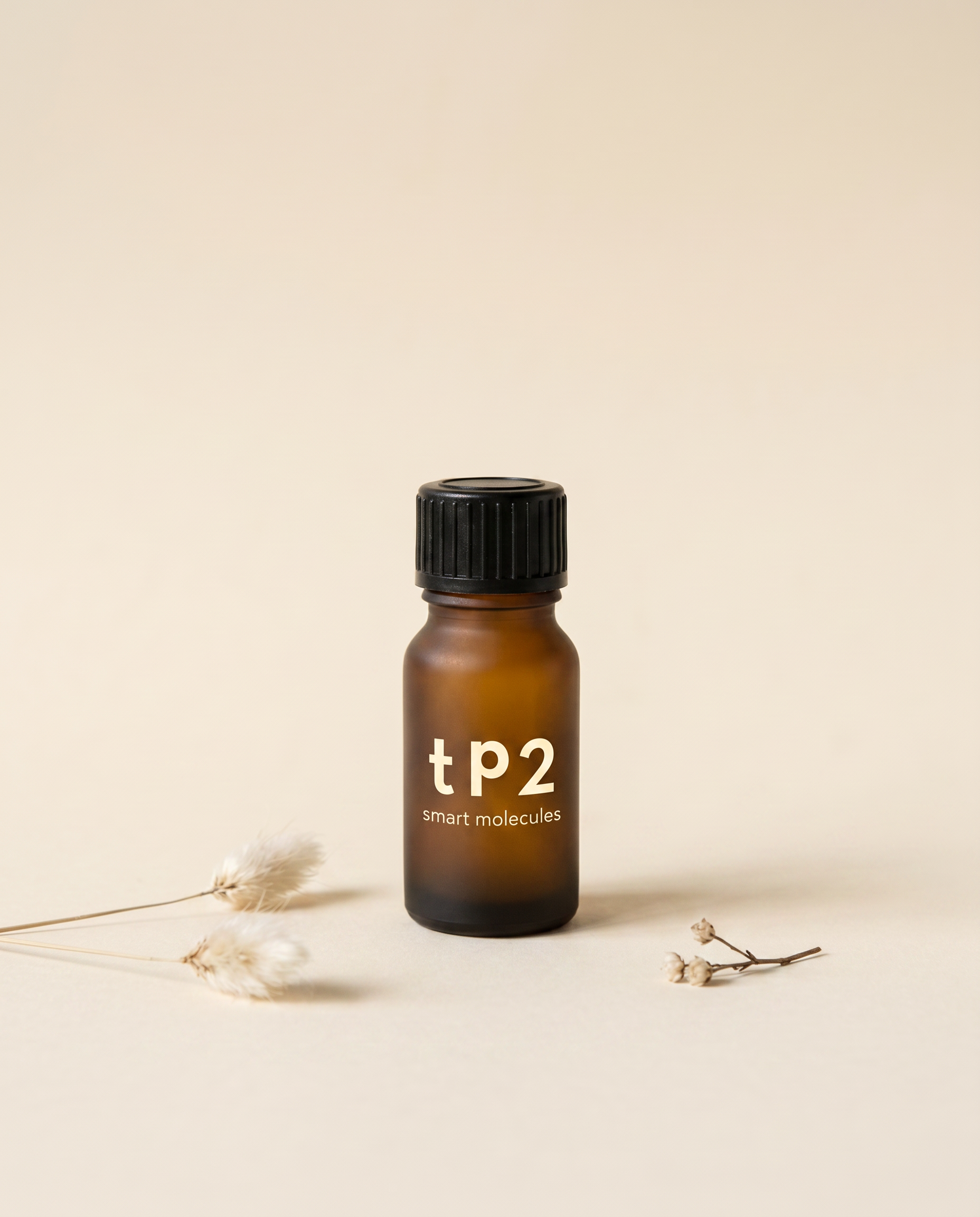
A diffuser is quick to set up. With a little care, it will look even better. Three simple tips. The Right Dosage Less is more. Start with a few drops. Feel your way. A good scent isn't obtrusive. It's simply there. The exact amount depends on the device and room size — please observe the product instructions. The Right Location Place the diffuser in an open and slightly elevated position. Not in a draft. Not next to the heater. This way, the scent will spread evenly throughout the room. Care and Cleaning Change the water regularly. Clean the tank periodically with a mild detergent and clear water. A clean diffuser keeps the scent clear. Step by Step Fill the tank with water – up to the mark. Add a few drops of TP2. Turn on the device in an open space. After use, empty and let dry. Frequently Asked Questions How many drops of aroma oil should I put in the diffuser? Start with a few drops and adjust according to room size. For exact quantities, refer to the product instructions. Where is the best place to put the diffuser? In an open and slightly elevated position. Not in a draft, not near heat sources. How do I clean the diffuser? Change the water regularly. Clean the tank with a mild detergent and clear water. Sources General application and care instructions for ultrasonic diffusers (manufacturer's specifications) Note: Always observe the product instructions. This article does not contain any health-related claims. Three drops. Seven minutes. A forest.
Learn moreEssential Oils, Aroma Oils, Terpenes – The Difference | TPdeux
Three terms. Often confused. Essential oil. Aroma oil. Terpenes. Knowing the difference helps you make a calmer choice. A quick overview. Essential Oil — The Plant Extract An essential oil is a pure extract from a plant. Usually obtained by steam distillation. It is a mixture of many natural substances — including terpenes. Aroma Oil — The Scent Concentrate Aroma oil, also known as fragrance oil, is a scent concentrate. Often produced in a laboratory. Stable and potent. It is made for room fragrancing — for diffusers, aroma lamps, nebulizers. Terpenes — The Building Blocks Terpenes are the individual scent molecules that make up fragrances. Pinene. Limonene. Linalool. They are found in essential oils — and can be precisely combined to form a composition. The Comparison at a Glance Essential Oil Aroma/Fragrance Oil Terpenes What it is pure plant extract fragrance concentrate individual scent molecules Origin 100% plant mostly synthetic plant or isolated Typical Use diverse room fragrancing building blocks for both Where TPdeux Stands TPdeux is a terpene-based composition. Made for diffusers — for room fragrancing. Inspired by the coniferous forest. Finely tuned. Frequent Questions What is the difference between essential oil and fragrance oil? An essential oil is a pure plant extract. A fragrance oil (aroma oil) is a scent concentrate, often synthetic, made for room fragrancing. Are terpenes the same as essential oils? No. Terpenes are individual scent molecules. Essential oils are mixtures that consist of, among other things, terpenes. What is an aroma oil suitable for? For room fragrancing via diffusers, aroma lamps, or nebulizers. Sources "Ätherische Öle", Wikipedia — Composition and extraction (de.wikipedia.org/wiki/Ätherische_Öle) Note: This article explains fragrance categories. It does not contain any health-related statements. A drop of silence.
Learn moreTerpenes Explained - The Scent Molecules of the Forest | TPdeux
The forest smells like a forest. That sounds simple. Behind it lies chemistry—and it is beautiful. What you smell when you walk through a coniferous forest has a name. Terpenes. What Terpenes Are Terpenes are a large group of natural fragrances. Plants produce them—especially conifers. Chemically, they consist of small, identical building blocks called isoprene units. From these, an astonishing variety arises. Several thousand different terpenes are known. They are the main component of many essential oils and resins. Why Plants Smell Terpenes are the language of plants. They attract. They repel. They protect the tree. For us, they are primarily one thing: fragrance. The resinous breath of a pine. The freshness of a lemon. The coolness of fresh needles. Three Well-Known Terpenes Pinene — the smell of pine and coniferous forest. The most widespread terpene in nature. Limonene — the bright freshness of citrus peels. Linalool — the soft, calm note known from lavender. Three names. Three worlds. And yet the same family. Terpenes at TPdeux TPdeux is a composition of carefully selected terpenes. Inspired by the coniferous forest. Tuned for the diffuser. No promise. A fragrance. The essence of the forest, captured in a drop. Frequently Asked Questions What are terpenes? Natural fragrance molecules produced by many plants—especially conifers. They give forests, citrus, and herbs their characteristic scent. Are terpenes natural? Yes. They are widely found in nature and are the main component of many essential oils and resins. Where are terpenes found? In conifers, citrus fruits, herbs, and many other plants. Sources "Terpenes," Wikipedia — on definition, structure from isoprene units, and occurrence (en.wikipedia.org/wiki/Terpene) Note: This article explains terpenes as natural fragrances. It contains no health-related claims. The essence of the forest.
Learn moreForest Bathing at Home – What Shinrin-Yoku Means | TPdeux
There's a scent you know. Resin. Damp moss. Cool needles in the early morning. You don't need to explain it. You recognize it instantly. The Japanese have a word for it. Shinrin-Yoku. Forest bathing. No sport. No hike. An immersion. A word from Japan The term is younger than you might think. In 1982, Tomohide Akiyama, then head of Japan's Ministry of Agriculture, Forestry and Fisheries, coined it. The country was growing fast. Cities grew louder. The forest receded into the distance. Shinrin-Yoku was an invitation to return. Literally: a bath in the atmosphere of the forest. Not measuring. Not performing. Absorbing. What happens during forest bathing Forest bathing is a matter of the senses. You walk slowly. You stop. You listen. Light falls in streaks through the canopies. The ground gives way. The air carries earth and resin. What creates the scent of a coniferous forest are, among other things, terpenes — the aromatic molecules that trees release into the air. More on this in a separate article. Nothing more is needed. A path. A silence. A breath. The forest that remains Not everyone has a coniferous forest on their doorstep. And not every Wednesday allows for a walk. This is where the idea of TPdeux begins. A composition of terpenes, inspired by forest bathing, for your diffuser at home. A drop. A subtle aroma in the room. The forest that remains — even if the day is different. Frequently asked questions What does Shinrin-Yoku mean? Literally "forest bathing": the mindful absorption of the forest atmosphere with all senses. The term was coined in Japan in 1982. Do you have to go into the forest for it? Originally, yes. But the idea can be brought home on a small scale — through sound, light, and scent. How do I bring the forest feeling into the room? With calm, minimal distraction, and a forest-inspired scent, for example, via a diffuser. Sources "Shinrin-yoku", Wikipedia — on the term and its origin in 1982 (en.wikipedia.org/wiki/Shinrin-yoku) Ministry of Agriculture, Forestry and Fisheries, Japan — Origin of the term Shinrin-Yoku Note: This article describes the cultural concept of forest bathing and a forest-inspired aroma experience. It contains no health-related claims. Forest bathing. For your home.
Learn more